As the America 250 April theme has focused on transportation, the journey tells a tale of more than miles traveled. It holds a powerful theme—movement. Not just from place to place, but forward: through innovation, connection, courage, and care. Marion’s story of transportation is one of momentum, shaped by people and moments that carried ideas—and each other—into the future.
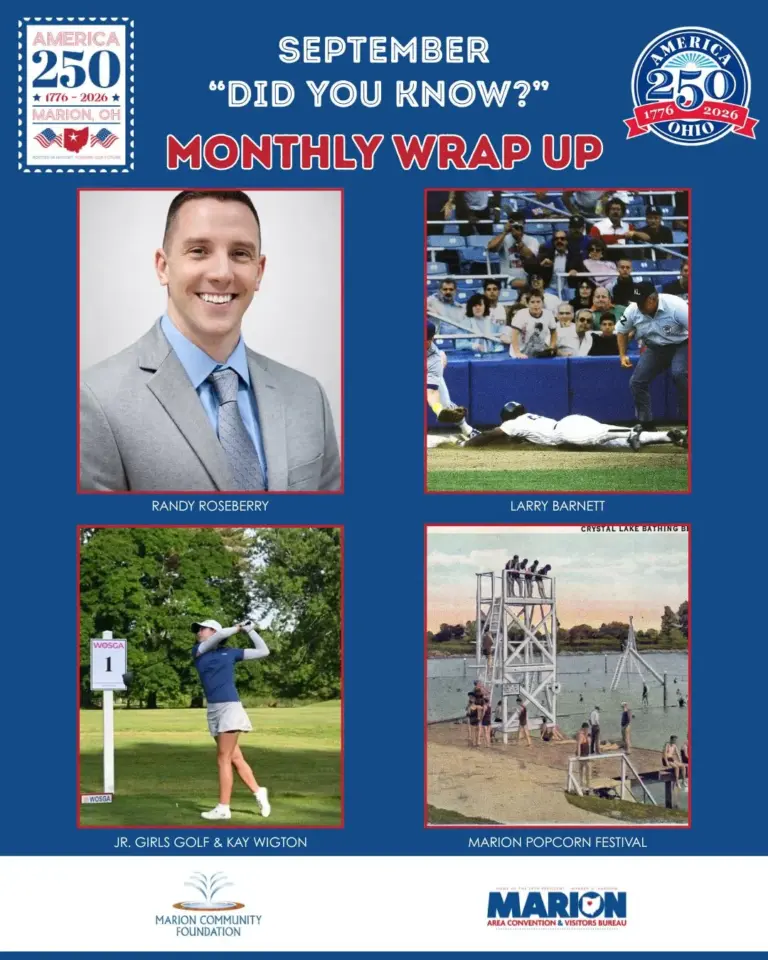
That spirit of innovation in transportation is perfectly captured in the legacy of Edward Huber. Raised on a farm and driven by firsthand experience, Huber revolutionized agriculture with his 1874 patent for a revolving hay rake, helping farmers work more efficiently than ever before. After arriving in Marion in 1865, he built what would become the Huber Manufacturing Company—a global force in machinery. From steam engines to the first mass-produced gasoline tractors and road rollers used worldwide, Huber’s work quite literally helped move the world forward. Today, his legacy lives on at the Huber Machinery Museum.
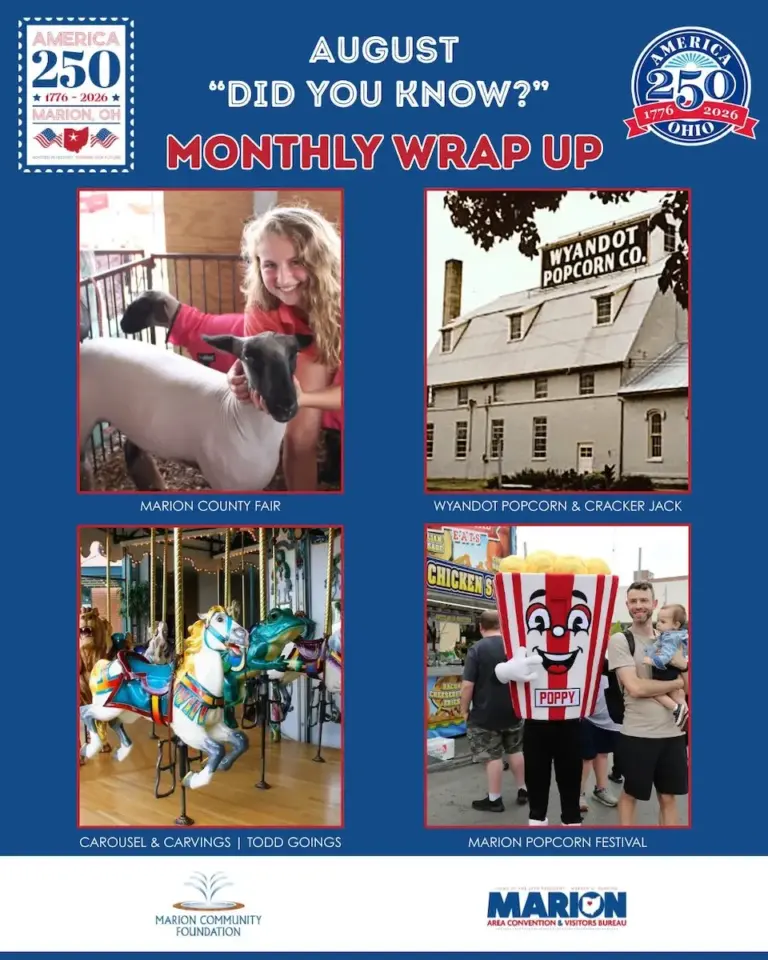
When Marion Union Station opened in 1902, it transformed the city into a bustling rail hub. Four rail lines converged here, creating a rare double diamond crossing that still draws railroad enthusiasts today. Movement also defined Marion’s role in connecting people. Inside, travelers experienced modern comforts—electric lights, indoor plumbing, and spacious waiting areas—marking a new era of transportation. Though passenger rail declined and the station closed in 1971, dedicated preservation efforts have ensured that this landmark still stands, reminding us of a time when the sound of a train whistle promised a travel adventure creating a connection to people and places.
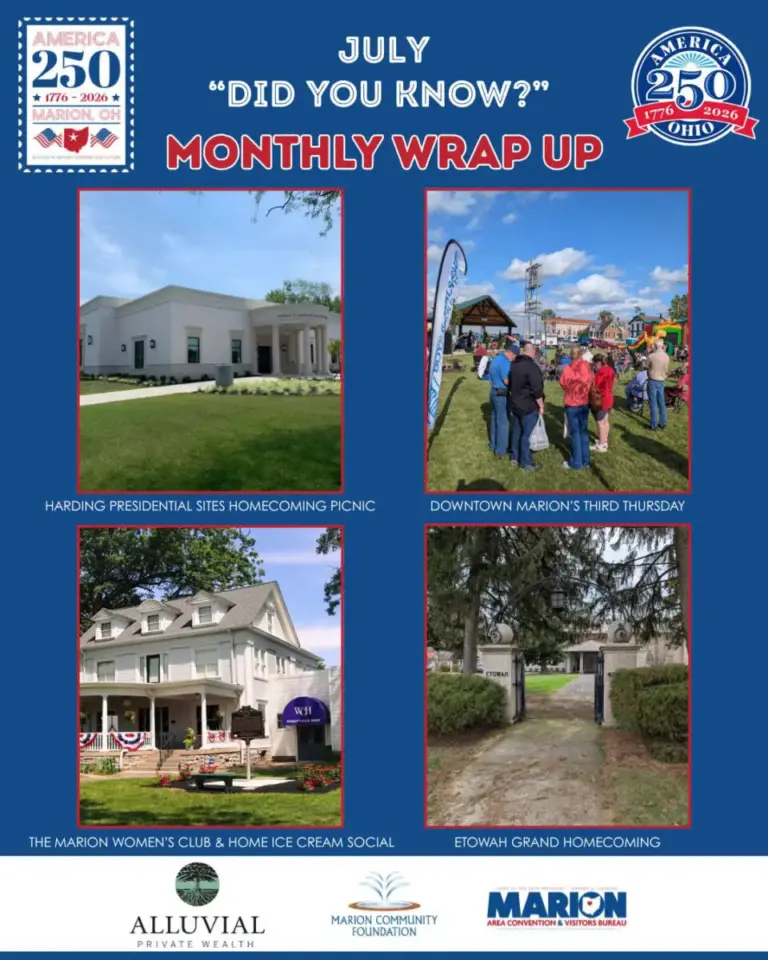
But not all movement is about industry or infrastructure. Sometimes, it’s about something far more personal—like access to care. Today, transportation services through the Marion County Council on Aging and the Marion Senior Center provide a vital lifeline for local seniors. With nearly 2,000 individuals receiving over 10,000 rides in the past year—traveling more than 111,000 miles—these programs ensure residents can reach medical appointments, grocery stores, and essential services. It’s a powerful reminder that in Marion, progress means taking care of one another.
And sometimes, transportation produces movement that is the pursuit of freedom itself.
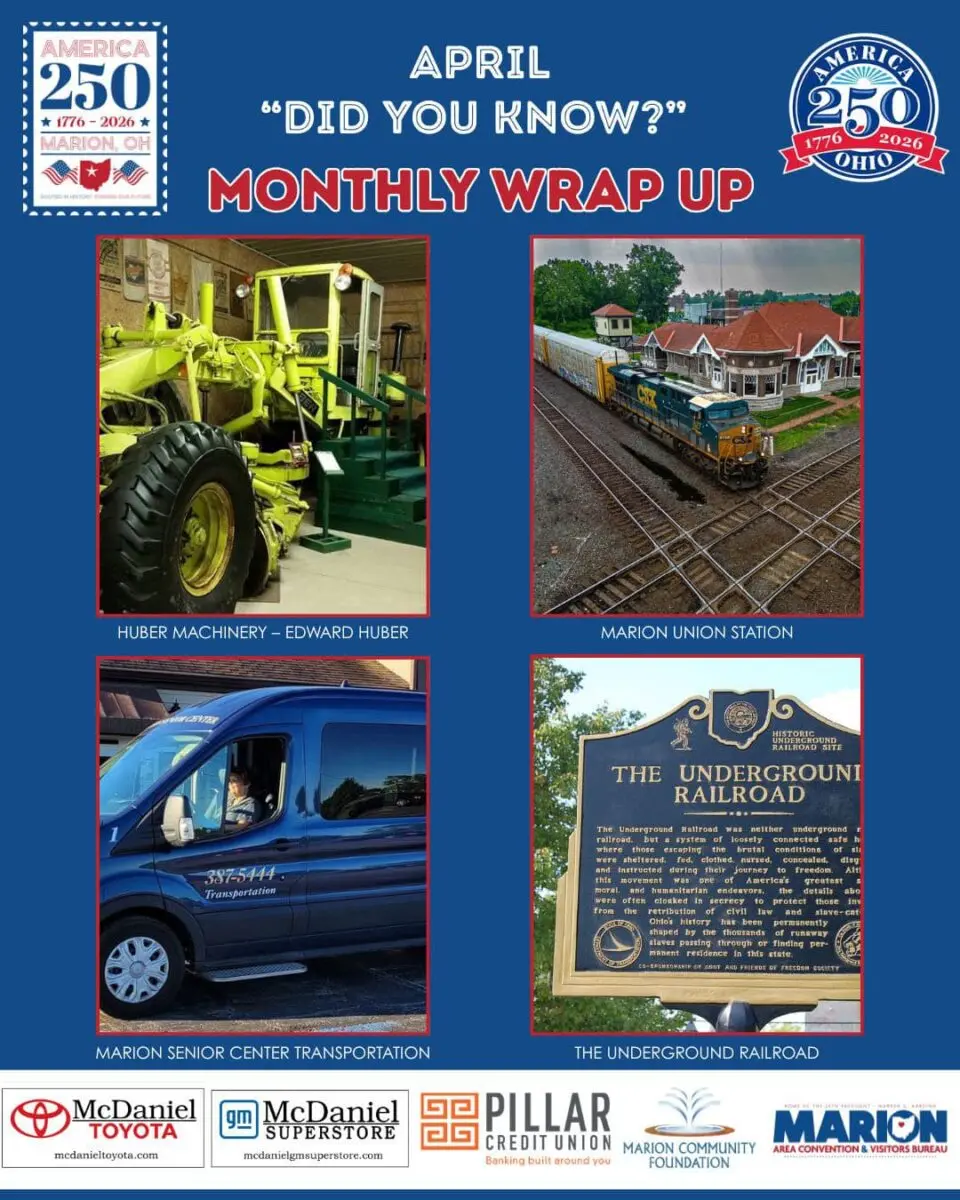
In 1839, William “Black Bill” Mitchell stood in a Marion courtroom facing the threat of being returned to slavery. Presided over by Ozias Bowen, the case took a dramatic turn when Mitchell was declared free on a technicality. Yet his fight wasn’t over. As armed slave catchers attempted to seize him, Marion citizens intervened—risking their own safety to stand for justice. In the chaos, Mitchell escaped, aided by local Quakers and the Underground Railroad, eventually reaching freedom in Canada. His story is a testament to the courage and conviction that have long been part of Marion’s identity.
Transportation. From groundbreaking machinery to railroads, from community care to the fight for freedom, Marion’s history is defined by movement with purpose. As we continue celebrating America 250, these stories remind us that progress isn’t just about how far we go. From past to present, Marion’s transportation story is measured in more than just miles. It’s all about the lives we change along the way.